Unlocking the Future: The Role of High Frequency PCBs in Modern Technology

Imagine a world where lightning-fast communication, pinpoint accuracy, and unparalleled efficiency are not luxuries but essentials. This is the realm of high-frequency printed circuit boards (HF PCBs). These technological marvels are the backbone of industries that demand exceptional speed and precision. Let’s delve into the applications that make HF PCBs indispensable, and uncover the innovations driving their evolution.
What Defines High Frequency PCBs?
Characteristics That Set HF PCBs Apart
- Frequency Range: Operating at frequencies above 1GHz, HF PCBs excel in transmitting high-speed signals.
- Material Composition: Constructed using advanced PCB materials like PTFE (polytetrafluoroethylene) and ceramic-filled substrates, HF PCBs minimize signal loss.
- Thermal Stability: Ensures consistent performance under demanding conditions, contributing to effective PCB thermal management.
- Low Dielectric Constant: Critical for maintaining signal integrity and reducing power loss.
Why Speed and Precision Matter
In high-frequency environments, even a minor delay or distortion can lead to catastrophic failures. Precision ensures flawless signal transmission, while speed enables real-time data processing—a necessity in cutting-edge applications.
Top Applications of HF PCBs Requiring Speed and Precision
1. Telecommunications: The Backbone of Connectivity
- 5G Infrastructure: HF PCBs power base stations and antennas, enabling ultra-fast data transfer and low latency in 5G technology.
- Satellite Communication: Precision is critical for maintaining uninterrupted global connectivity.
2. Aerospace and Defense: Navigating High-Stakes Missions
- Radar Systems: RF PCBs ensure accurate detection and tracking in air traffic control and military operations.
- Avionics: High-speed design circuits enable real-time navigation and communication in aircraft systems.
3. Automotive Industry: Driving the Future
- Autonomous Vehicles: HF PCBs handle immense data loads from LiDAR, cameras, and sensors.
- Advanced Driver Assistance Systems (ADAS): Precision in PCBs enhances safety features like collision avoidance and adaptive cruise control.
4. Medical Devices: Precision Meets Life-Saving Technology
- Imaging Systems: High-frequency PCBs are integral to MRI and CT scanners, delivering clear and accurate images.
- Portable Devices: Precision ensures reliability in devices like glucose monitors and portable ECG machines.
5. IoT and Smart Devices: The Connected World
- Wearables: Compact HF PCBs enable high-speed performance in fitness trackers and smartwatches.
- Home Automation: From smart thermostats to security cameras, HF PCBs facilitate seamless communication.
Overcoming Challenges in HF PCB Design
Signal Loss and Crosstalk
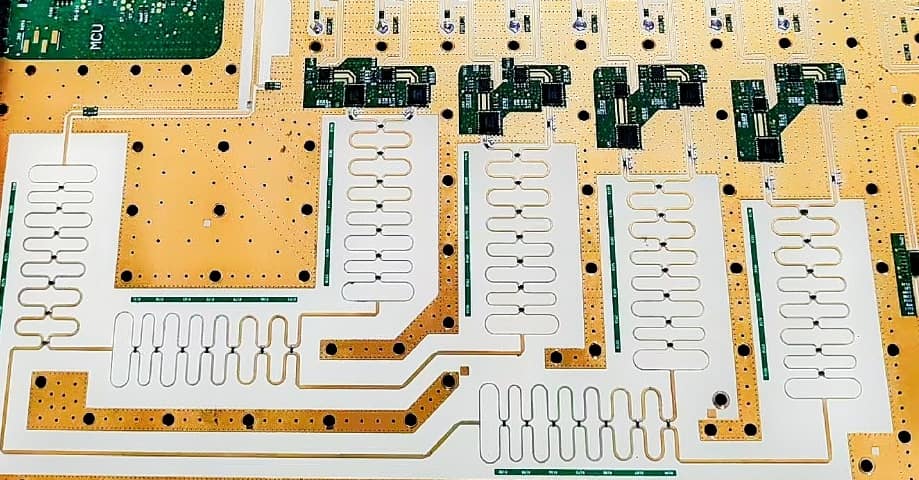
Signal interference can degrade performance. Strategies like controlled impedance and optimized layer stacking mitigate these issues.
Material Selection
Choosing the right substrate impacts thermal performance, durability, and signal integrity. Materials like Rogers material and Taconic are leading choices.
Thermal Management
Heat dissipation is crucial in high-speed applications. Incorporating thermal vias and heat sinks enhances reliability.
Innovations Driving HF PCB Advancements
Advanced Manufacturing Techniques
- Laser Drilling: Ensures precise vias for improved signal flow.
- Multilayer Construction: Supports complex designs for high-speed applications.
Simulation and Testing Tools
Software solutions like HFSS (High Frequency Structure Simulator) optimize PCB layouts for maximum efficiency.
Improved Materials
Low-loss dielectric materials reduce signal attenuation, enhancing speed and precision.
Best Practices for HF PCB Precision
Optimize Layout and Design
- Shorten signal paths to reduce delay.
- Implement proper grounding techniques to minimize noise.
Partner with Experts
Collaborate with experienced manufacturers who specialize in RF PCBs and HF PCBs to ensure high-quality production.
Emphasize Quality Assurance
Use advanced testing methods, such as time-domain reflectometry (TDR), to verify precision.
Conclusion

High-frequency PCBs are the unsung heroes driving innovation in telecommunications, aerospace, automotive, healthcare, and IoT. Their ability to combine speed with precision makes them indispensable in a rapidly evolving technological landscape. By overcoming challenges and embracing cutting-edge solutions, HF PCBs will continue to shape the future of modern industries.
For businesses seeking reliable, high-performance PCBs, partnering with experienced manufacturers is the key to staying ahead in the race for speed and precision.